
Originally Posted On: https://www.ucanpack.com/blog/post/kraft-shipping-boxes-and-natural-void-fill-pairings-that-cut-plastic-waste-by-half
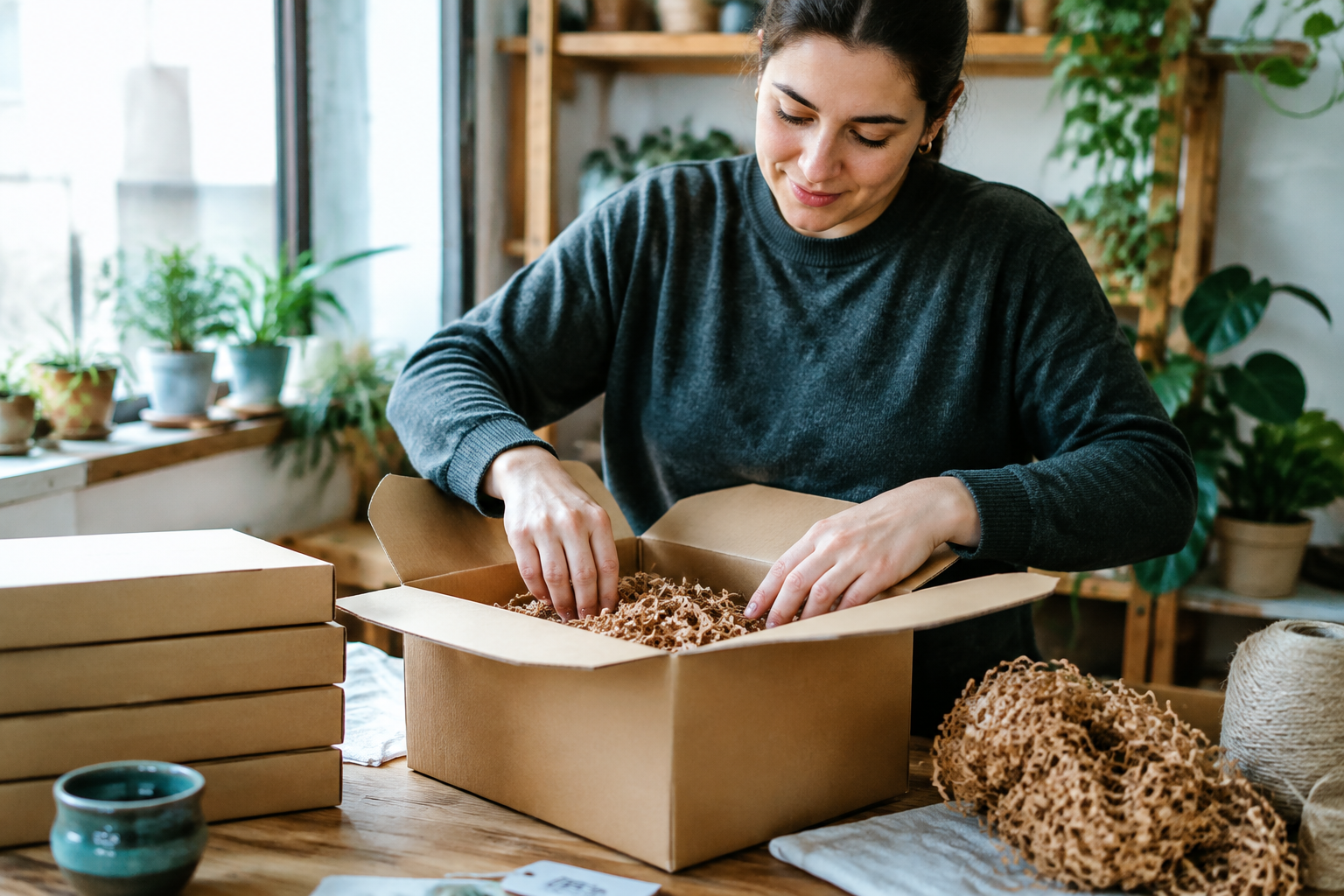
Key Takeaways
-
Pick kraft shipping boxes made of corrugated board, not thin paperboard. Corrugated protects your handmade goods, and it recycles curbside without a fight.
-
Right-size before you buy. A box that fits your product within 1-2 inches on each dimension cuts void-fill needs and keeps small items from rattling.
-
Match flute to fragility. B-flute handles most orders, E-flute suits light items that need a cleaner look, and heavier goods call for stronger corrugated.
-
Swap bubble wrap and peanuts for crinkle paper, kraft paper wrap, and cardboard sheet dividers. This pairing is how you cut plastic waste roughly in half without losing protection.
-
Build a rustic brand look with twine, rubber stamps, and stickers on plain kraft mailer boxes or kraft boxes with lids. You skip custom printing and still look handcrafted.
-
Order samples first, then buy a wholesale bundle. Test a sample with your real product, then use a quick checklist for 50 to 300 orders a month so you never run out mid-week.
Open a typical handmade order and count the plastic. Bubble wrap, a poly bag around the candle, tape that won't recycle, and a handful of foam peanuts that skitter across the kitchen floor. Customers notice. So do the ones who buy rustic, eco-friendly goods in the first place.
Kraft shipping boxes fix most of that, and they do it without a printing bill. The brown corrugated look already says "made by hand" before anyone lifts the flap. But the box is only half the story. What goes inside matters just as much, because a natural-looking carton stuffed with plastic fill sends a mixed message (and customers do read it that way).
Marcus Delgado has packed millions of orders over 20 years, and his take is blunt: most sellers shipping 50 to 300 orders a month use too much filler and a box that's one size too big. Right-size the carton, swap in paper-based cushioning, and plastic use drops by half. Sometimes more.
Why Kraft Shipping Boxes Beat Plastic-Heavy Packaging for Handmade Orders
A ceramics seller packs a set of four mugs. She wraps each in bubble wrap, drops in foam peanuts, seals it all with clear plastic tape, and slaps on a poly-bagged packing slip. Four kinds of plastic. One small order. Her buyer opens it and sighs.
That's the problem. Handmade buyers pay for craft, and a plastic-stuffed carton feels like the opposite. Paper-based kraft shipping boxes fix the look and the waste in one move.
What Kraft Corrugated Actually Is (and What It Isn't)
Kraft corrugated is a fluted paper layer sandwiched between two flat liners. It's cardboard, plain and simple, made from unbleached pulp. It isn't coated, laminated, or waterproof by default.
Honestly, that matters. Strength comes from the flute, not the color. B-flute handles most small handmade goods, while heavier pieces need a thicker wall. For damp climates or long routes, weather resistant shipping boxes give extra protection without adding plastic.
Where Plastic Sneaks Into a Typical Etsy Shipment
Most sellers count the mailer and stop there.
Look closer.
-
Void fill: peanuts and air pillows
-
Cushioning: bubble wrap around every item
-
Sealing: clear plastic tape strips
-
Extras: poly sleeves, shrink wrap, and plastic-backed labels
Swap each one for paper, and plastic drops by half fast. Right-size the box first. A snug carton needs far less filler.
Matching Kraft Shipping Boxes to Your Product: Size, Dimensions, and Flute
Oversized boxes waste money. Every empty inch needs filler, and filler is where most plastic waste comes from. Measure your product's length, width, and height, then add 1 to 2 inches per side for cushioning. That's the whole formula.
Right-Sizing Small Boxes to Cut Void Fill Needs
Most handmade orders ship fine in small kraft shipping boxes. A candle, a ceramic mug, a stack of cards. Pick the snuggest size, and you'll cut crinkle paper use by about half. Odd shapes are a different story, and long boxes suit items like rolled textiles or wooden spoons that would swim in a cube.
-
Gap under 1 inch: a sheet of kraft paper is plenty.
-
Gap of 1 to 2 inches: crumpled paper or crinkle fill.
-
Gap over 2 inches: go down a size. Don't pad it.
Choosing Between B-Flute, E-Flute, and Heavier Corrugated for Fragile Items
Flute decides how much a box absorbs. E-flute (1/16") is thin and tidy, so it works for light gifts and small jewelry. B-flute (1/8") is the standard pick for most corrugated cartons and handles typical ceramics when wrapped well.
But here's the thing. Fragile glass or heavy pieces need more. Double-wall board or bulk cargo shipping boxes give extra crush resistance when you're packing several items together. Check the ECT rating, and order a free sample before committing to a full bundle (it takes a few days, and it beats a pile of broken orders).
Natural Void Fill Pairings That Replace Bubble Wrap and Peanuts
Why are so many handmade sellers still stuffing kraft shipping boxes with plastic peanuts? Habit, mostly. Paper-based fill protects just as well when it's matched to the product, and it keeps the rustic look intact the moment the lid opens.
Crinkle Paper and Kraft Paper Wrap for Gift-Style Presentation
Crinkle paper is the easy win. A loose handful cushions soaps, candles, small ceramics, and it looks like a gift. Wrap each item in kraft paper first, then nest it in the fill. Pair it with kraft paper mailers for flat extras like prints, cards, and care sheets.
Fill the box. Don't overfill it. Press down lightly on the fill: if the item shifts when you shake the box, add more.
Cardboard Sheets, Dividers, and Inserts for Heavy or Fragile Goods
Paper fill alone won't hold a stoneware mug or a jar of candles. Heavy goods need structure. Cut corrugated sheets into dividers, and the items stop knocking into each other. In practice, a simple cross-divider cuts breakage in multi-item orders more than any amount of loose fill.
-
Layer pads: a sheet on the bottom and top spreads the load.
-
Dividers: keep jars and bottles from touching.
-
Custom inserts: a die-cut cardboard cradle holds odd shapes.
Buying flat shipping boxes in bulk also saves garage space, and the leftover cardboard scraps become free inserts. Right-size the box first. Less empty space means less fill, and that's where the plastic savings really come from.
Kraft Mailer Boxes, Boxes With Lids, and Window Options for Rustic Branding
Roughly 7 in 10 shoppers say packaging shapes how they feel about a handmade product before they touch it. Kraft does that job cheaply. It looks earthy, it recycles, and it needs no printing at all.
Mailer-style kraft shipping boxes lock shut without tape, so you skip extra plastic. A kraft box with lid suits candles, soaps, and gift sets. A kraft box with a clear lid or a window lets buyers see the product (handy at craft fairs, less so for fragile shipping). For taller or awkward items, side loading shipping boxes make packing faster and cut down on bent corners.
Pair any of them with crinkle paper instead of bubble wrap. Fit matters more than filler.
Getting a Branded Look Without Custom Printing (Twine, Stamps, and Stickers)
Skip the printer. A $10 rubber stamp does more for a rustic look than most people expect.
-
Twine: wrap it twice and knot it. Natural jute fits the craft feel.
-
Stamps: press your logo on the lid in black or brown ink.
-
Stickers: a round label seals tissue paper and carries your shop name.
Customers photograph this stuff.
Free marketing, honestly.
When Color Boxes or White Boxes Make Sense Alongside Kraft
Kraft isn't right for everything. Skincare and clean-beauty items often look sharper in white boxes, and a teal or pink color box works for seasonal gift lines. Keep kraft as your default and use color for limited drops. That keeps your stock simple and your brand recognizable.
Buying Kraft Shipping Boxes in Bulk: Samples, Minimums, and Ordering Checklist
Bigger bundles don't mean better deals. That's the myth. For a seller moving 50 to 300 orders a month, a 1,000-box pallet usually just means a cluttered garage and a wrong-size regret six weeks later.
Start small. Order two or three sizes, then scale once the numbers prove out. Plenty of makers also compare wholesale corrugated shipping boxes against kraft before settling on a finish.
How to Test a Sample Before You Commit to a Wholesale Bundle
A sample is only useful if you abuse it. Pack your heaviest, most awkward product with your planned void fill (crinkle paper, not plastic). Then drop it from waist height onto concrete, twice.
-
Fit: Leave about 1 inch of cushion room on each side.
-
Strength: Press the lid and corners. Soft spots mean a weak flute.
-
Seal: Tape one box and shake it hard.
-
Post office check: Weigh it packed. Dimensions drive postage as much as weight does.
Fragile ceramics? Skip the guesswork and mail a test box to a friend across the country.
A Simple Ordering Checklist for 50 to 300 Orders a Month
-
Measure your top three products: length, width, and height.
-
Pick sizes that cover about 90% of orders, no more than three.
-
Confirm the flute: B-flute for most goods, E-flute for light items.
-
Check the minimum bundle size. Ideally 25 to 100 units.
-
Match your void fill to the box so nothing rattles.
-
Count storage space. A month and a half of stock is plenty.
Reorder when you hit two weeks of supply left. Simple. And it keeps you from scrambling at retail prices mid-week.
Frequently Asked Questions
What are kraft shipping boxes made of?
They're corrugated cardboard with a natural brown kraft paper surface. The paper comes from unbleached wood pulp, which is why it's tough and why it has that rustic look. Most are recyclable and often carry recycled content.
Are kraft shipping boxes strong enough for handmade products?
Yes, if you match the flute to the product. B-flute handles most candles, soaps, and ceramics when you add paper void fill. For heavier or fragile pieces, go with double-wall or check the Edge Crush Test (ECT) rating before you buy.
Do I need custom printing to make kraft boxes look professional?
No. Plain kraft already reads as handmade and eco-friendly. Add a rubber stamp, a sticker, or a strip of twine, and you've got a branded look with zero printing fees. I've seen sellers do this for years and customers love it.
How do I pick the right size?
Measure your product's length, width, and height. Add 1 to 2 inches on each side for cushioning. Don't oversize. Extra air means extra filler, higher postage, and a bigger chance your item rattles around.
Can I buy kraft boxes wholesale if I only ship 50 to 300 orders a month?
You can. Look for bundles of 25 to 100 with tiered volume breaks so you're not stuck with a thousand boxes in the garage. Ordering two or three sizes covers most small product lines.
What's the difference between kraft mailer boxes and kraft shipping boxes?
Mailers are one-piece and self-locking, so they need no tape and look neat when opened. Standard shipping boxes (RSC style) are taller, more flexible on size, and better for heavier or multi-item orders. Pick mailers for presentation, RSC for bulk and weight.
Are kraft boxes recyclable?
Yes, plain kraft corrugated is curbside recyclable in most areas. Keep it that way by skipping plastic tape and plastic fill. Paper tape and crinkle paper keep the whole package easy to recycle.
Can I order samples before I commit?
Absolutely, and you should. Pack a real product, shake it, and drop it from waist height. Ten minutes of testing beats a damaged-order refund every time.
Are kraft boxes with a window or lid available for gifts and food?
Yes. Kraft boxes with lids and window styles are common for gift sets and bakery-style items. For anything that touches food, confirm the material is rated for food contact before you order.
Cutting plastic waste by half doesn't take a packaging overhaul. It takes three decisions made once and repeated 300 times a month.
Sellers who get there start with a box that actually fits. A snug kraft box needs far less filler, and less filler means fewer bubbles, peanuts, and air pillows ending up in a customer's recycling bin. Next comes the fill itself: crinkle paper for gift-style orders, cardboard dividers for anything heavy or breakable. Neither one needs plastic to do the job. Twine, a rubber stamp, or a simple sticker then carries the rustic branding that custom printing would otherwise handle.
The weak spot for most small shops is guesswork. Skip it. Kraft shipping boxes are easy to test before a full commitment, so order a few samples, pack a real order, and shake the box. Drop it from waist height. If the product holds still, the size and flute are right.
Pick your two best-selling products today, measure them, and request samples in the closest matching sizes. Run that one test this week, and the bulk order afterward becomes a confident choice rather than a gamble.
UCANPACK
753A Tucker Rd
Winder, GA 30680
1 201-975-6272
https://ucanpack.com


